Manual investigations, disconnected data, and false alarms are quietly slowing down quality teams and most organizations have normalized it.

Quality teams are not the bottleneck.
They are compensating for a system that was never designed to support decision intelligence for cold chain logistics.
In most organizations, release decisions still require:
Pulling data from multiple carrier portals and IoT platforms
Downloading and reconciling logger files
Manually reconstructing shipment context
Reviewing SOPs outside of operational systems
Re-entering decisions into QMS after the fact
This manual reconstruction adds days — not because of regulation, but because the decision process itself is fragmented
On paper, cold chain product release is straightforward.
In reality, it’s one of the most disconnected workflows in logistics and quality operations.
A single release decision depends on answers to questions like:
Did any temperature excursion actually impact product life?
Which alarms represent real risk versus noise?
What do SOPs and lane qualifications say for this specific shipment?
What action is required — if any?
Without cold chain AI grounded in context, every shipment is treated as a worst-case scenario.
False alarms are one of the largest hidden costs in cold chain operations.
Most investigations do not uncover true product risk — but they still consume the same time, documentation, and approvals.
When alerts are generated without context:
Quality teams investigate non-events
Real risks compete with noise
Trust in monitoring systems erodes
Cold chain AI without decision intelligence simply creates more work, not better outcomes.
Visibility tools answered one question: "What Happened?"
Cold chain decision intelligence answers different questions:
Does this matter?
What does our SOP say?
Is there actual risk to product life?
What decision should be made now?
Dashboards and analytics provide data.
They do not provide decisions.
Without decision intelligence, visibility increases review effort instead of reducing it.
What are the unforeseen costs of this problem?
As a result:
Excessive Inventory holding costs
Most cold chain systems were built to monitor, not to decide.
As a result:
Logistics and Quality systems remain disconnected
SOPs live in documents instead of workflows
Lane qualifications are static and outdated
Shipment outcomes do not improve future decisions
Cold chain decision intelligence closes this gap by connecting data, rules, and outcomes into a single operational layer.
When decision intelligence is embedded into cold chain operations, release changes fundamentally:
A single, unified record of shipment condition and custody
Cold chain AI that evaluates alerts against SOPs and contracts
False alarms automatically silenced when no product risk exists
Lane qualification updated continuously from real shipment results
Faster, more confident product release without compromising compliance
This is not automation for speed’s sake. It is automation for decision quality.
Cold chain AI becomes valuable only when it is grounded in:
Your SOPs
Your contracts
Your historical shipment outcomes
Without this foundation, AI produces alerts.
With it, AI enables decision intelligence for cold chain logistics.
That distinction determines whether technology reduces work — or creates more of it.
Platforms like PAXAFE are designed to serve as the decision intelligence layer for cold chain logistics.
By consolidating transportation data across devices and carriers, digitizing SOP-driven quality workflows, and learning from real shipment outcomes, teams can:
Reduce product release time
Eliminate unnecessary investigations
Improve lane risk accuracy over time
Shift Quality focus from data gathering to decision-making
The outcome is not just faster release but more trusted release decisions.
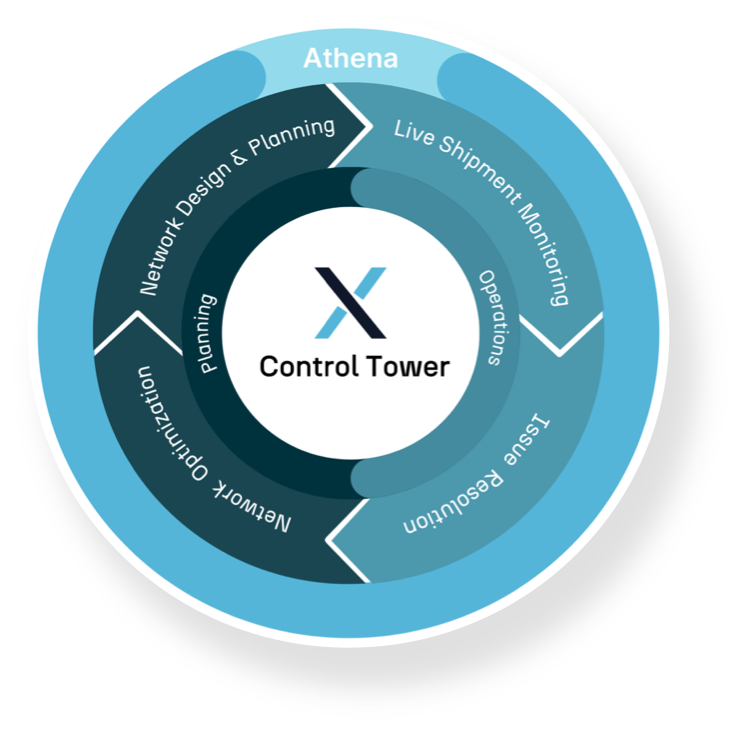
Cold chain decision intelligence is the ability to automatically evaluate shipment data against SOPs, lane qualifications, and historical outcomes to support fast, defensible decisions.
Cold chain AI analyzes data. Decision intelligence applies that analysis to real operational decisions using defined rules and context.
Yes. By eliminating manual data reconciliation and false alarm investigations, teams can reduce release timelines without compromising compliance.
.png?width=2000&height=500&name=Microsoft%20Azure%20Banner%20(1).png "Cold Chain AI on Microsoft Azure")